


Agentic AI Frameworks Enabling Smarter Enterprise Execution
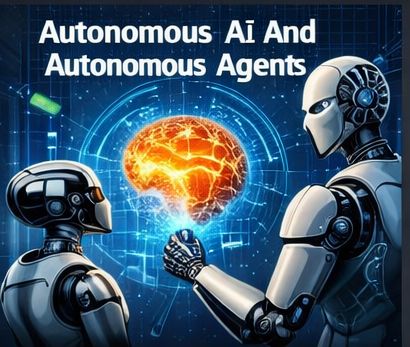
The Rise of Autonomous AI and Agentic Systems
Autonomous AI is rapidly reshaping how organizations design, deploy, and scale intelligent systems. Unlike traditional automation, which follows predefined rules, autonomous AI systems are capable of perceiving their environment, making decisions, and taking action with minimal human intervention. This shift is being driven by advances in large language models, reinforcement learning, and real-time data processing, enabling more adaptive and goal-oriented behavior across industries.
At the center of this evolution is the autonomous agent. An autonomous agent is a software entity designed to independently plan, reason, and execute tasks to achieve specific objectives. These agents can interact with other systems, tools, and even humans, making them particularly valuable in complex, dynamic environments. As organizations seek efficiency and resilience, the adoption of AI agent architectures is accelerating across enterprise functions.
How Agentic AI Is Transforming Enterprise Workflows
Agentic AI represents a new paradigm where multiple AI agents collaborate, delegate subtasks, and optimize outcomes without constant supervision. Instead of relying on a single monolithic model, agentic AI systems orchestrate networks of specialized agents, each responsible for planning, execution, verification, or learning. This modular approach improves scalability and allows systems to adapt to changing conditions in real time.
In enterprise settings, AI agent solutions are increasingly used for autonomous IT operations, supply chain optimization, financial analysis, and customer support. For example, an autonomous agent can monitor system performance, detect anomalies, initiate corrective actions, and document outcomes—all without human input. In knowledge-intensive domains, AI agents assist with research synthesis, code generation, and decision support, significantly reducing operational overhead.
The flexibility of autonomous AI also enables continuous learning. By integrating feedback loops and performance metrics, agents can refine their strategies over time, moving closer to true self-improving systems. This capability is particularly relevant in fast-changing markets where static automation quickly becomes obsolete.
The rapid technological progress in autonomous AI is mirrored by strong market growth. In practical terms, this expansion reflects increasing confidence among enterprises and investors in the long-term value of autonomous systems. Reframed in context, recent projections indicate that the global autonomous AI and autonomous agents market is on a steep growth trajectory, driven by widespread adoption across sectors and sustained investment in AI infrastructure. According to Grand View Research, the market is projected to reach USD 70.53 billion by 2030, growing at a CAGR of 42.8% from 2023 to 2030.
This growth is fueled by several factors, including rising demand for intelligent automation, improvements in cloud and edge computing, and the integration of autonomous AI into mission-critical applications. Organizations are no longer experimenting at the margins; they are embedding autonomous agent capabilities directly into core business processes.
Challenges and the Road Ahead
Despite its promise, autonomous AI also introduces new challenges. Governance, transparency, and alignment remain key concerns, particularly as autonomous agent systems gain greater decision-making authority. Ensuring that AI agent behavior aligns with organizational objectives and regulatory requirements is critical for sustainable deployment.
Looking ahead, the convergence of autonomous AI, multimodal models, and real-time data streams will further enhance agentic AI capabilities. As tooling and frameworks mature, autonomous agents will become easier to deploy, monitor, and scale. Ultimately, autonomous AI is moving from a cutting-edge innovation to a foundational layer of digital transformation, redefining how work is performed and decisions are made across the global economy.

 English
 Arabic
 French
 Spanish
 Portuguese
 Deutsch
 Turkish
 Dutch
Dutch
 Italiano
 Russian
 Romaian
 Portuguese (Brazil)