


Managed DDoS Protection Market Size, Share, and Industry Insights
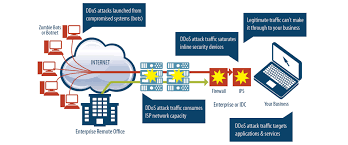
The Managed DDOS Protection Market Trends indicate significant technological evolution and service delivery advancement reshaping protection capabilities across global markets. Protection providers are embracing new approaches that enhance detection speed, mitigation effectiveness, and operational efficiency. The Managed DDOS Protection Market size is projected to grow USD 63.34 Billion by 2035, exhibiting a CAGR of 15.12% during the forecast period 2025-2035. Artificial intelligence integration is transforming attack detection and response through automated analysis and mitigation. Zero-day attack protection is advancing through behavioral analysis identifying previously unknown attack patterns. Edge computing deployment is enabling faster mitigation response closer to attack sources and targets.
AI and machine learning integration represents a dominant trend transforming DDoS protection capabilities significantly. Machine learning algorithms identify attack patterns and anomalies faster than traditional signature-based detection methods. Behavioral analysis enables detection of sophisticated attacks mimicking legitimate traffic patterns effectively. Automated response capabilities reduce time-to-mitigation from minutes to seconds during attack events. Predictive analytics forecast attack likelihood enabling proactive defensive posture adjustments. Continuous learning improves protection effectiveness as systems analyze evolving attack methodologies.
Hybrid protection deployment trends combine cloud scrubbing centers with on-premise mitigation appliances effectively. Always-on cloud protection provides continuous monitoring and instant response to volumetric attacks. On-premise components handle application-layer attacks requiring deeper traffic inspection and analysis. Orchestration between cloud and on-premise components ensures seamless attack response coordination. Hybrid approaches address diverse attack types through appropriate mitigation location selection. Failover capabilities between deployment modes ensure protection continuity during equipment issues.
API protection trends address growing attack focus on application programming interfaces and microservices architectures. API-specific attack detection identifies malicious requests targeting programmatic interfaces precisely. Rate limiting and request validation protect APIs from abuse and denial-of-service attacks. Bot management integration distinguishes legitimate API clients from malicious automated traffic. GraphQL and REST API protection addresses emerging interface vulnerabilities and attack vectors. Developer-friendly integration enables protection deployment without application code modifications.
Top Trending Reports -
Japan Workforce Analytics Market Growth

 English
 Arabic
 French
 Spanish
 Portuguese
 Deutsch
 Turkish
 Italiano
 Russian
 Romaian
 Portuguese (Brazil)
 Greek
Greek