


Automotive Coatings Strategies for Sustainable Vehicle Manufacturing
Evolving Landscape of Automotive Coatings
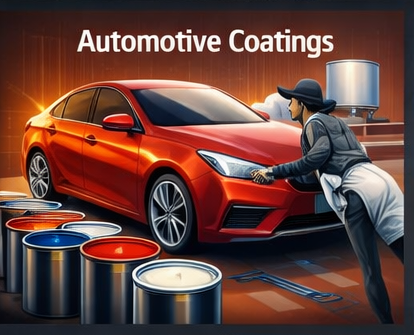
The automotive sector is undergoing a significant transformation, driven by changes in mobility, sustainability mandates, and consumer expectations for durability and aesthetics. Within this evolution, automotive coatings play a central role, not only in defining a vehicle’s visual appeal but also in enhancing corrosion resistance, weather protection, and long-term performance. Manufacturers are increasingly treating coatings as a strategic component of vehicle engineering rather than a purely decorative layer.
Advancements in resin chemistry, pigment technology, and application processes are reshaping how automotive paint systems are formulated and applied. From traditional solvent-based systems to next-generation waterborne and powder coatings, the emphasis is on reducing environmental impact while maintaining or improving finish quality.
Sustainability and Regulatory-Driven Innovation
One of the strongest trends in automotive coatings is the shift toward sustainable solutions. Stricter environmental regulations across North America, Europe, and Asia-Pacific have accelerated the adoption of low-VOC and waterborne coatings. These solutions significantly reduce emissions during application without compromising durability or gloss.
OEMs are also investing in energy-efficient curing technologies, such as UV- and electron-beam-cured coatings, which reduce production time and energy consumption. In parallel, bio-based raw materials are gaining attention as suppliers seek to lower the carbon footprint of automotive paint formulations. These developments align closely with automakers’ broader ESG commitments and carbon-neutral manufacturing goals.
Performance-Focused Layer Technologies
Modern coating systems are no longer single-layer solutions. Instead, they are engineered multilayer structures designed to deliver specific functional benefits. The basecoat automotive layer is increasingly optimized for color depth, metallic effects, and customization options that appeal to consumers seeking distinctive vehicle finishes. Advanced pigments and effect materials now allow for color-shifting and high-chroma finishes that were previously difficult to achieve at scale.
Above the basecoat, the clearcoat automotive layer has become a focal point for innovation. Clearcoats are being enhanced with scratch resistance, self-healing properties, and improved UV stability. These features extend vehicle lifespan and preserve showroom-quality appearance, which is especially important as consumers keep vehicles longer and resale value becomes more critical.
The growth outlook for automotive coatings reflects both rising vehicle production in emerging economies and steady demand for refinishing and aftermarket solutions. According to Grand View Research, the global automotive coatings market is projected to reach approximately USD 33.4 billion by 2030, expanding at a healthy compound annual growth rate through the latter half of the decade. This growth is supported by increasing demand for passenger vehicles, light commercial vehicles, and electric vehicles, each of which requires specialized coating solutions.
Asia-Pacific remains the largest and fastest-growing region, driven by high automotive production volumes in China and India. Meanwhile, Europe continues to lead in regulatory-driven innovation, particularly in sustainable automotive paint technologies. North America shows strong demand for high-performance and premium coatings, especially in SUVs and electric vehicles.
Integrated Outlook for the Automotive Coatings Industry
In essence, the automotive coatings industry is balancing aesthetics, performance, and sustainability more effectively than ever before. As vehicle designs become more complex and electrification accelerates, coating systems must adapt to new substrates, thermal requirements, and design philosophies. The integration of advanced automotive coatings, high-performance basecoat automotive layers, and durable clearcoat automotive technologies is enabling manufacturers to meet these evolving demands.
Looking ahead, continued collaboration between automakers, coating suppliers, and material scientists will be essential. Innovations in digital color matching, smart coatings, and environmentally responsible formulations are expected to further redefine the role of automotive paint in vehicle manufacturing and ownership.

 English
 Arabic
 French
 Spanish
 Portuguese
 Turkish
 Dutch
Dutch
 Italiano
 Russian
 Romaian
 Portuguese (Brazil)
 Greek
Greek