


The Anatomy of a New Reality: Deconstructing the Modern XR Market Solution
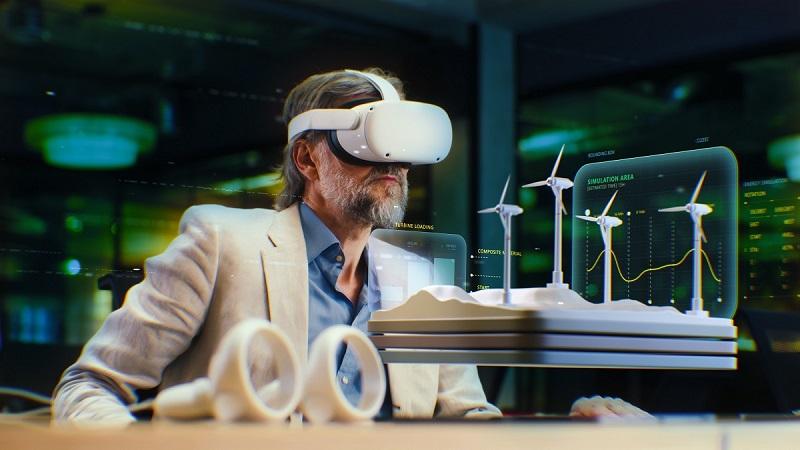
A modern, compelling Extended Reality experience is the product of a highly complex and deeply integrated technology stack, where hardware and software must work in perfect synchrony to trick the human brain. A complete Extended Reality (XR) Market Solution is an end-to-end system designed to sense the user and their environment, process that information, render a virtual world in real-time, and display it in a convincing way. This architecture is composed of several key layers: the input and tracking systems, the core compute and rendering engine, the display and optics, and the software development platform. Understanding the anatomy of this solution is essential to appreciating the immense technical challenges that the industry is solving to deliver on the promise of seamless and believable spatial computing.
The foundation of any XR solution is the input and tracking layer. This is the system that understands the user's position, orientation, and interactions. The key technology here is "inside-out" 6 Degrees of Freedom (6DoF) tracking. This uses multiple cameras on the headset to constantly scan the user's environment, using computer vision algorithms (specifically SLAM - Simultaneous Localization and Mapping) to calculate the headset's precise position and orientation in 3D space. These same cameras are also used for hand tracking, allowing the system to create a detailed, real-time 3D model of the user's hands for controller-free interaction. Eye tracking is another critical input, used for things like foveated rendering (rendering only where the user is looking at high resolution) and for new user interface paradigms based on gaze.
The heart of the solution is the core compute and rendering engine. This is the "brain" of the device, responsible for running the application and generating the graphics for the virtual world. In a standalone headset like the Meta Quest, this is a powerful yet highly efficient mobile System-on-a-Chip (SoC), similar to what is found in a high-end smartphone. For a high-end PC-VR or MR headset, this is a powerful desktop PC with a high-end graphics card (GPU). This compute platform runs the application, which is almost universally built using a real-time 3D game engine like Unreal Engine or Unity. The engine is responsible for rendering two separate images (one for each eye) at a very high and consistent frame rate (typically 90 frames per second or higher) to ensure a smooth and comfortable experience that does not induce motion sickness.
Finally, the rendered images are delivered to the user through the display and optics layer. This is arguably the most challenging and critical part of the entire hardware solution. This layer consists of high-resolution, high-refresh-rate micro-displays and a complex set of lenses that magnify and focus the image for the user's eyes. In VR, the goal is to create a wide field of view to maximize immersion. In AR, the challenge is even greater, as the optics must be transparent to allow the user to see the real world while also reflecting the light from the micro-display into their eye. This is often achieved with a complex optical element called a "waveguide." The quality, brightness, and field of view of this optical system are key differentiators between different XR devices and a major area of ongoing research and development.
Other Exclusive Reports:
Marketing Cloud Platform Market

 English
 Arabic
 French
 Spanish
 Portuguese
 Deutsch
 Turkish
 Dutch
Dutch
 Italiano
 Russian
 Romaian
 Greek
Greek